ULM Coyote II à vendre — Jabiru 2200, train classique
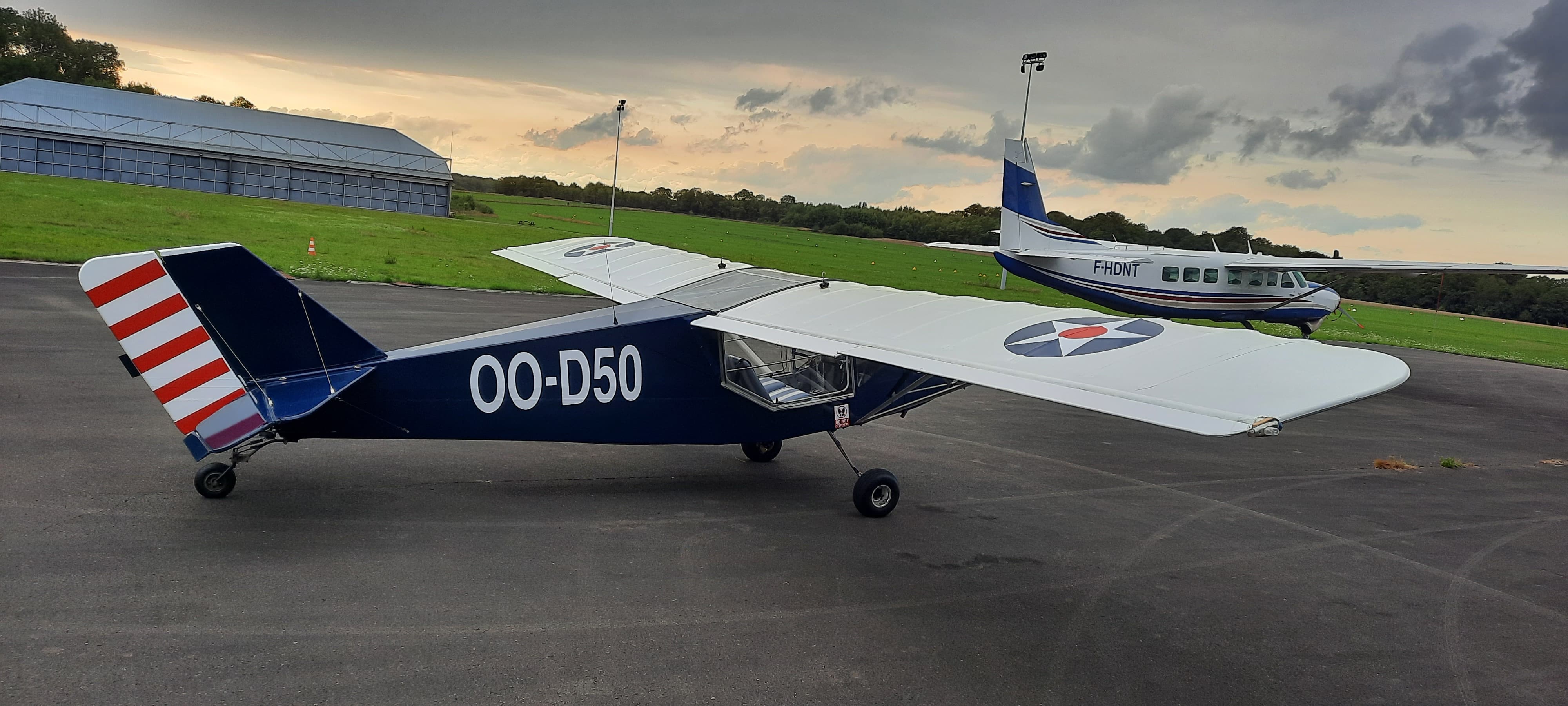
Un Rans S-6 Coyote II de 1998, immatriculé OO-D50, basé à l'aérodrome de Cerfontaine, au bord des Lacs de l'Eau d'Heure. Aile haute, haubans, train classique, 262 kg à vide : c'est l'ULM qu'on sort du hangar pour voler bas et lentement, se poser dans un pré et rentrer content. Hélice carbone neuve, transpondeur mode S, horizon Dynon — il est équipé pour partir loin, pas seulement pour le tour de piste.
Coyote II microlight for sale — Jabiru 2200, taildragger
A 1998 Rans S-6 Coyote II, registered OO-D50, based at Cerfontaine airfield in southern Belgium, beside the Eau d'Heure lakes. High wing, lift struts, conventional gear, 262 kg empty: this is the aircraft you pull out of the hangar to fly low and slow, land in a field and come home grinning. New carbon propeller, mode S transponder, Dynon attitude indicator — equipped to go places, not just to fly circuits.
Pourquoi ce Coyote-là
Le Rans S-6 Coyote II est une cellule qui a fait ses preuves : structure tubulaire entoilée, aile haute haubanée, une visibilité vers le bas que peu d'ULM offrent. Ce n'est pas une machine à faire des chiffres — c'est une machine à regarder le paysage passer sous les roues.
Le Jabiru 2200 est un quatre-cylindres à plat, sans réducteur ni circuit de refroidissement liquide : peu de pièces, peu de choses à surveiller, et un bruit d'avion plutôt que de mobylette. Associé à une hélice DUC Swirl 2 en carbone montée neuve en mars 2025, il tire court au décollage et tourne rond en croisière.
Le train classique divise, et c'est normal : il demande des pieds vivants au roulage. En échange, il encaisse l'herbe, les pistes courtes et les terrains où un train tricycle irait chercher les ennuis. Avec un décrochage annoncé à 57,5 km/h et 262,74 kg à vide, les vitesses en finale sont celles d'un appareil qu'on pose là où on veut.
Et surtout : 1 278 heures, entretenu et volé régulièrement à Cerfontaine. Un appareil qui vole est un appareil qui va bien. Celui-ci n'a pas dormi dix ans au fond d'un hangar.
Why this particular Coyote
The Rans S-6 Coyote II is a proven airframe: welded tube and fabric, strut-braced high wing, and a view downwards that very few microlights can match. It was never built to chase numbers — it was built to let the landscape slide past under the wheels.
The Jabiru 2200 is a flat four with no gearbox and no liquid cooling: few parts, few things to watch, and the sound of an aeroplane rather than a two-stroke. Paired with a carbon DUC Swirl 2 propeller fitted new in March 2025, it pulls hard off the ground and runs smoothly in the cruise.
The conventional gear divides opinion, as it always does: it wants live feet on the ground. In return it takes grass, short strips and the kind of fields where a nosewheel goes looking for trouble. With a quoted stall of 57.5 km/h and an empty weight of 262.74 kg, final approach happens at speeds that let you put it down where you like.
Above all: 1,278 hours, maintained and flown regularly at Cerfontaine. An aircraft that flies is an aircraft that is well. This one has not spent ten years asleep at the back of a hangar.
Fiche technique · Full specification
- Modèle Model
- Rans S-6 Coyote II
- Année Year
- 1998
- Immatriculation Registration
- OO-D50
- Moteur Engine
- Jabiru 2200
- Hélice Propeller
- DUC Swirl 2 — installée 03/2025
- Train Landing gear
- Classique / taildragger
- Places Seats
- 2, côte à côte
- Masse à vide Empty weight
- 262,74 kg
- Vitesse de décrochage Stall speed
- 57,5 km/h (1 cran de volet)
- VNE VNE
- 193 km/h
- Heures cellule Airframe hours
- 1 278 h — évolutives
- Basé à Based at
- Aérodrome de Cerfontaine (EBCF), Belgique
- Prix Price
- 25 000 €
Heures cellule relevées le 15 septembre 2026, évolutives : l'appareil vole toujours. Airframe hours recorded on 15 September 2026, and still rising — the aircraft is still flying.
Les photos Photographs
Cliquez une photo pour l'agrandir. Click a photo to enlarge it.
Venir le voir
L'appareil est visible à l'aérodrome de Cerfontaine (EBCF), Route des Lacs 50, 5630 Cerfontaine — à 25 minutes de Charleroi, 45 de Namur, une heure de Bruxelles et environ 1 h 15 de la frontière française.
Le mieux est d'appeler Éric directement : il connaît l'avion par cœur, répond aux questions techniques sans détour, et convient avec vous d'une date pour le voir au sol et en vol.
Come and see it
The aircraft can be viewed at Cerfontaine airfield (EBCF), Route des Lacs 50, 5630 Cerfontaine, Belgium — 25 minutes from Charleroi, 45 from Namur, an hour from Brussels and roughly 1 h 15 from the French border.
The best move is to call Éric directly: he knows the aircraft inside out, answers technical questions straight, and will arrange a date to see it on the ground and in the air.
+32 499 696 932
Route des Lacs 50
5630 Cerfontaine, Belgique
Questions fréquentes
Quel est le prix du Coyote II ?
25 000 €. L'appareil est vendu par ses propriétaires, basés à l'aérodrome de Cerfontaine (EBCF), sans intermédiaire ni commission.
Combien d'heures a la cellule ?
1 278 heures au compteur, et elles continuent d'évoluer : l'appareil vole encore régulièrement. C'est peu pour une cellule Rans S-6, réputée pour sa longévité.
Peut-on venir le voir et l'essayer ?
Oui. L'appareil est visible à l'aérodrome de Cerfontaine (EBCF), Route des Lacs 50, 5630 Cerfontaine. Un essai en vol se convient directement avec le propriétaire, par téléphone au 0499 696 932.
Le Coyote II est-il difficile à piloter avec un train classique ?
Il demande d'être présent aux pieds au décollage et à l'atterrissage, comme tout train classique. En contrepartie, il décolle court, se pose court et accepte l'herbe sans broncher. Avec un décrochage à 57,5 km/h, les vitesses en finale restent très basses.
Quel est l'équipement radio et transpondeur ?
Une radio Funke ATR 833-II (8.33 kHz) et un transpondeur Funke mode S, plus un horizon artificiel Dynon Avionics. De quoi traverser des espaces contrôlés et partir en navigation, pas seulement tourner autour du terrain.
L'hélice est-elle récente ?
Oui : une DUC Swirl 2 en carbone, montée en mars 2025.
Frequently asked questions
How much is the Coyote II?
€25,000. The aircraft is sold by its owners, based at Cerfontaine airfield (EBCF) in Belgium — no broker, no commission.
How many hours are on the airframe?
1,278 hours, and still rising: the aircraft is flown regularly. That is low for a Rans S-6 airframe, which is known for its longevity.
Can I come and see it, and fly it?
Yes. It can be viewed at Cerfontaine airfield (EBCF), Route des Lacs 50, 5630 Cerfontaine, Belgium. A test flight is arranged directly with the owner, by phone on +32 499 696 932.
Is the Coyote II hard to fly as a taildragger?
It asks for live feet on take-off and landing, as every taildragger does. In return it gets off short, lands short and takes grass without complaint. With a stall at 57.5 km/h, approach speeds stay very low.
What radio and transponder are fitted?
A Funke ATR 833-II radio (8.33 kHz) and a Funke mode S transponder, plus a Dynon Avionics attitude indicator. Enough to cross controlled airspace and go cross-country, not just fly circuits.
Is the propeller recent?
Yes — a carbon DUC Swirl 2, fitted in March 2025.
25 000 € · Visible à Cerfontaine, essai en vol à convenir. €25,000 · Viewable at Cerfontaine, test flight on request.
Route des Lacs 50, 5630 Cerfontaine · 0499 696 932